Limit your water use please

The flooding in Monxton  is having a terribly adverse effect on residents who live closest to the pumping station. They are very close to having their drains back up and flood their houses. Gardens and cellars are already flooded for some. The sewers are beyond critical and this is fast becoming a public health issue


Please be aware that every time you have a bath, leave the tap running when brushing your teeth, use the dishwasher or washing machine, or flush the loo- i.e. discharge large volumes of water – you are adding to the problem. So please limit your water use, as a consideration for other residents in the village.

(This is good practice for when we have a drought too and should become everyday habit!)

Flooding in Monxton

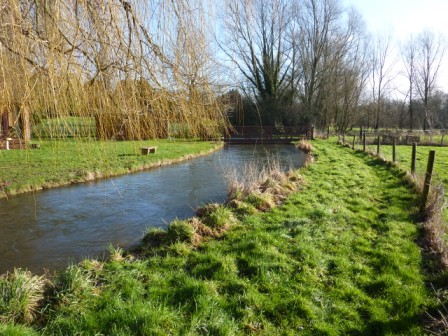
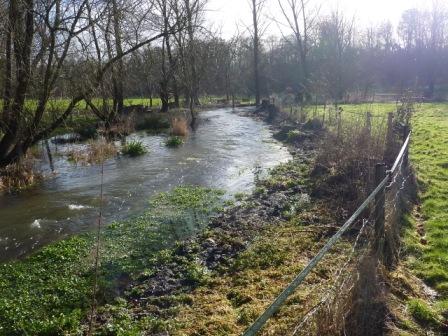
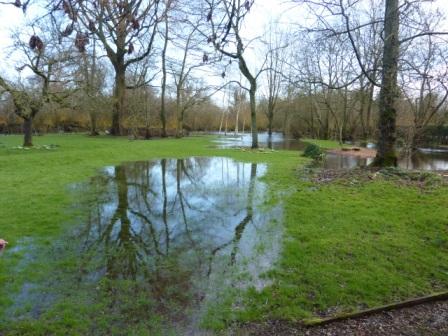
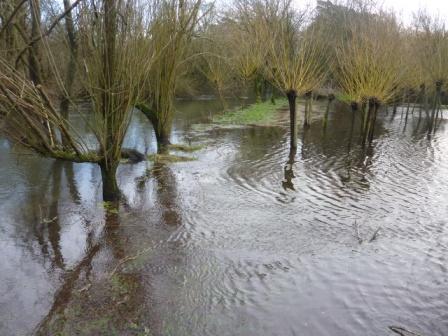
Pictures taken today (Saturday 8th February 2014) by a villager showing the extensive flooding in Monxton around the area of the pumping station, surrounding paddocks and gardens, adjacent to the Pillhill Brook. Despite the best efforts of Southern Water pumping out the ‘black water’ 24 hours a day since the beginning of January, the situation is worsening and the contaminated water is now flowing into Pillhill Brook. There has also been more than double the usual amount of rainfall which has added to these problems as well. Unfortunately the situation is exacerbated by the dam created by the previous owner of Upper Mill House, which is preventing the water from flowing away as quickly as possible, due to the constricted channel, as can be seen from the pictures below.

Mr Hayward's paddock adjoining Monxton Road and the pumping station and bordering Pillhill Brook

Mr Hayward’s paddock adjoining Monxton Road and the pumping station and bordering Pillhill Brook

Channel dug from paddock to river to allow floodwater to escape

Channel dug from paddock to river to allow floodwater to escape

Pillhill Brook looking towards the Fisks' property and the river splits into two channels just after the bridge

Pillhill Brook looking towards the Fisks’ property and the river splits into two channels just after the bridge

The junction of the mill race and the main river where a dam was created by the previous owner of Upper Mill House to channel water down the mill race and prevent water from running down the main river. This now needs to be removed to allow the high levels of water to flow away from the properties at the eastern end of Monxton, which are now beginning to flood

The junction of the mill race and the main river where a dam was created by the previous owner of Upper Mill House to channel water down the mill race and prevent water from running down the main river. This now needs to be removed to allow the high levels of water to flow away from the properties at the eastern end of Monxton, which are now beginning to flood

Pillhill Brook flowing down the main river channel. This has recovered significantly due to the high levels of water and is nearly back to the condition of previous years

Pillhill Brook flowing down the main river channel. This has recovered significantly due to the high levels of water and is nearly back to the condition of previous years

This tree is clearly planted in the main river bed which was undertaken by the previous owner, Simon Burgess

This tree is clearly planted in the main river bed which was undertaken by the previous owner, Simon Burgess

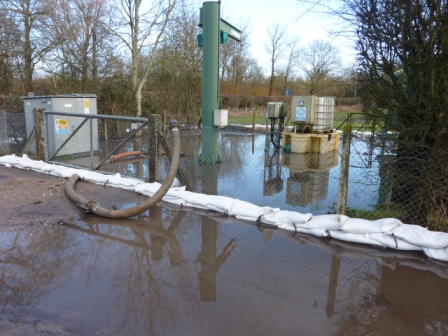
Sandbags around Monxton pumping station which has suffered a failure and the contaminated water is now bubbling up through the pumping station and onto the road and into Mr Hayward's paddock

Sandbags around Monxton pumping station which has suffered a failure and the contaminated water is now bubbling up through the pumping station and onto the road and into Mr Hayward’s paddock

The flooded pumping station at the junction of the High Street and Chalkpit Lane

The flooded pumping station at the junction of the High Street and Chalkpit Lane

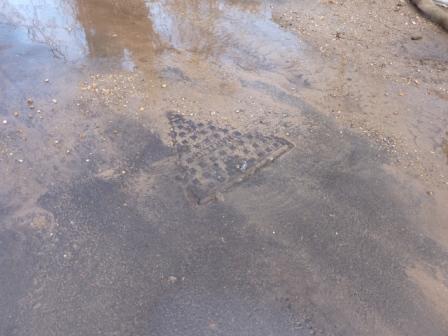
Flooding up through the man hole cover

Flooding up through the man hole cover

The garden of Monxton Mill is now flooded

The garden of Monxton Mill is now flooded

More flooding at Monxton Mill

More flooding at Monxton Mill

Flooding at Monxton Mill

Flooding at Monxton Mill

Flooding at Monxton Mill

Flooding at Monxton Mill

A Warning to Dog Owners

There have been a number of deaths of dogs reported after they have been exposed to a mystery toxin.  Many of those have been walked in the New Forest, Dorset, Worcestershire, Cornwall, County Durham and Surrey.  Dog owners need to be vigilant amid fears the deadly disease is more widespread than initially thought.

Dog owners have been warned to look out for wounds that do not heal or lesions on the limbs or face of their pets.  Additionally, if your dog becomes quiet, starts vomiting or stops eating then please seek immediate advice from your vet.

The Monxton Pumping Station continues to flood the adjacent roads and area with polluted water.  As a precaution, and as there has been an unexplained death of a local dog (which is not necessarily connected) we would like to advise dog owners not to walk their dogs near the Pumping Station, until it has stopped flooding.

Pumping Station Overflow – Jan 2014

Details of the potential flooding incident in the village over the past few days:

When a resident returned home at approx 1450 on 01 Jan 14 they noticed that their downstairs loo was not flushing away properly: this is always an indicator that the drains are flooded or backing up.

1500 01 Jan 14: a rapid check of the pumping station on Chalkpit Lane revealed that the pumping station itself was under water and water flooding up to depth of at least 3 or 4 inches; concurrently the sewer in the road was flooding water into the road.  Fortunately in both cases the water was grey water and not raw sewage – or appeared not to be.

1505 01 Jan 14: Southern Water (SW) were called and the incident reported.

1750 01 Jan 14: Checked situation again.  The rain having eased off the in-road sewage was not flooding. However the pumping station itself was still flooding – with water bubbling up at quite a rate and was under a number of inches of water.  A torchlight scan of the field between the pumping station and the Pillhill Brook reveal a considerable amount of surface water; but the field was not fully flooded.

By 2035 01 Jan 14:  Two SW vans at the pumping station, and the loo was flushing properly again.  So drains no longer backing up.

0155 02 Jan 14:  Large (water) tanker arrives on site.  (Comment: A similar tanker was on site on 03 Dec 13 when the drains were cleared by SW (as precaution)).

By 0630 02 Jan 14: Tanker had departed.  And in full daylight all the surface water in the field had gone.

This incident shows how reliant we are on the Chalkpit Lane pumping station remaining operational.  That the field between the pumping station and the Pillhill Brook is vital to flood prevention; but that it can only cope with one event – either the failure of the pumping station/drains backing up or the stream breaking its banks.  What is now clear it cannot cope with both concurrently.  Given that the drains/pumping station was cleaned as recently as 03 Dec 13, what has happened to cause it – the pumping station – to fail/block some 30 days later?

With more heavy rain forecast in the coming days, and if you believe some forecasters some weeks, it is essential that we know the cause here and what can be done to ameliorate/prevent future occurrences.

The good news is that SW ring back system does work and they did turn out – albeit after some 7 hours.  It was perhaps fortunate that the heavy rain eased off during this period.

03 Jan 2014: Woke up this morning to find that loo not flushing properly.  Went to inspect the Chalkpit Lane pumping station. Grey water/sewage bubbling up not only in the station – now under a couple of inches – but also in the road – both in Chalkpit Lane and in the High Street.  Flooding in the field between Pumping Station and Pillhill Brook more extensive than on 01 Jan 14.

Have reported incident to Southern Water at approx 0750 today 03 Jan 14.  If back flooding continues untreated water will soon get into Pillhill Brook and thus pollution into the local river network.

Sat 04 Jan 14.  Loos not working again this morning – not flushing away. Checked the Pumping Station at approx 10:00 hrs.  Grey water coming up through the manhole on site: no signs of flooding in the field (yet); no water bubbling up in road (yet). Automatic callback to Southern Water awaited (call put in at approx 10:15) so that the problem can be reported (again).  Not looking good for Sunday 05 Jan, with heavy rain forecast for a large part of the day.

For any problems call the Leak Line on 0800 820 999.  It goes through to the same department as the flooding number, which is a chargeable 0845 number. The more people that call from Monxton the better!

Chimney Fires – A Warning!

From Hampshire Fire & Rescue Service HQ, Eastleigh, Hampshire, SO50 9SJ
Tel: 023 8064 4000 

As a member of Hampshire’s Fire Authority, I am writing to raise your awareness of the devastation which may be caused by chimney fires within the home and to share some useful safety information for communities, as we go through the winter months..

In recent years we in Hampshire have seen many fires in homes which started in chimneys. Whilst we continue to successfully reduce the number of fires across Hampshire, recent years have seen an increase in chimney fires.

There are some specific actions that home owners can take to prevent these fires and I would ask that you bring to the attention of residents within your area:

  • Chimneys should be examined regularly. Fire can spread from within the chimney through worn brick jointing
  • Chimneys should be lined, especially in older properties and definitely in ALL thatch properties
  • Chimneys should be swept at the start of the burning season and then:
    • Once per year for smokeless fuel and oil
    • Twice a year for coal fires
    • Every three months for wood burning fires
    • Burning unseasoned wood will create greater soot and tar build up and should not be used or chimneys swept more often

We saw some devastating fires in thatch cottages last year.  All of these fires are believed to have started within chimneys.  Please encourage residents living in thatch buildings to have their chimney inspected by a qualified professional and always follow the guidance above.

For more information on chimney safety please go to http://www.hantsfire.gov.uk/yoursafety/athome/preventionathome/chimneyfires.htm

In all cases, householders should follow the basic principles of keeping safe from fire within the home.  This includes:

  • Always having working smoke detectors within the home – one on each level as a minimum;
  • Think about and practise an emergency evacuation plan and ensure everyone within the house knows what to do in a fire;
  • Reduce fire hazards within the home, such as ensuring all electrical equipment is in good order and sockets not overloaded, naked flames such as fires and candles are extinguished fully before going to bed and smoking is done in a safe place – discarding used cigarettes in a safe place.

More home safety information is available at http://www.hantsfire.gov.uk/yoursafety/athome/preventionathome.htm

As the weather turns colder for the winter, please do also ensure you and your community are prepared.  Hampshire Fire and Rescue Service leads the work of the Hampshire and IOW Local Resilience Forum in preparing for emergencies.  The following web page has more information how you can help your local community plan for emergencies including the colder weather http://www3.hants.gov.uk/localresilienceforum.htm.  In all cases please ensure the elderly and those more vulnerable to the cold and adverse weather are considered by the community.

Please help us to keep our local communities safe this winter.

Yours Faithfully

Keith Chapman

Bonfires, fireworks and thatch

Statistically, homes with thatched roofs are no more likely to catch fire than those with conventional roofs; however, if a thatched roof does ignite, the results are rapid and devastating.  We would ask that residents please do not light  bonfires or set off fireworks in their gardens, as they pose a serious risk to the  thatched properties in the village.

If you live under thatch it is wise to be extra vigilant around November 5th and make frequent checks on your roof.

Chinese lanterns are of particular concern, as the potential for harm when they descend is catastrophic, with a number of thatch fires resulting from these lanterns. (They are also very frightening for animals and livestock.) Please DO NOT use them.

For further information and advice, contact your local fire safety officer.

The laws concerning fireworks

  • It is illegal for anyone under 18 to possess a firework in a public place.
  • Fireworks cannot be set off by a private individual between 11pm and 7am except for certain nights of the year (ie New Year).
  • It is an offence to cause any unnecessary suffering to any captive or domestic animal.

Firework Fright!

Recommendations from the Blue Cross:

Every year thousands of animals will suffer as a result of fireworks being let off. Blue Cross animal hospitals across the country see a marked rise in pets requiring medication during such stressful times, and many animals are brought into Blue Cross adoption centres having run away from home.

Animals have very acute hearing. Loud bangs and whistles may cause them actual pain in their ears. But by following these simple guidelines your pet need not suffer.

Small pets and hens
Rabbits, guinea pigs, hamsters, gerbils, mice, ferrets and birds all need to be treated with special care when fireworks are being let off. These animals are easily frightened. The Blue Cross advises that owners of such types of small animal should follow these precautions:

  • Hutches/cages and enclosures should, if possible, be brought into a quiet room indoors, or into a garage or shed.
  • Give your pet extra bedding to burrow into so it feels safe.
  • If you cannot bring your pet’s hutch inside, you should turn its enclosure around so that it faces a wall orfence instead of the open garden.
  • Cover any aviaries or hutches with thick blankets or a duvet to block out the sight of the fireworks and deaden the sound of the bangs, but make sure there is enough ventilation.

Dogs & cats

  • Always keep dogs and cats inside when fireworks are being let off.
  • Make sure your dog is walked earlier in the day before the fireworks start.
  • Close all windows and doors, and block off catflaps to stop pets escaping and to keep noise to a minimum. Draw the curtains, and if the animals are used to the sounds of TV or radio, switch them on (but not too loudly) in order to block out some of the noise of the fireworks.
  • Ensure dogs are wearing some form of easily readable identification (ID) – even in the house. They should have at least a collar and tag.
  • Think about fitting pets with a microchip, so that if they do run away they have a better chance of being quickly reunited with you.
  • Prepare a ‘den’ for your pet where it can feel safe and comfortable – perhaps under a bed with some of your old clothes. It may like to hide there when the fireworks start.
  • Let your pet pace around, whine, miaow and hide in a corner if it wants to. Do not try to coax it out – it’s just trying to find safety, so don’t disturb it.
  • Try not to cuddle and comfort distressed pets as they will think you are worried too, and this may make the problem worse. Instead stay relaxed, act normally and praise calm behaviour.
  • Avoid leaving your pet alone during such potentially upsetting events. If you do have to leave the house, don’t get angry with your pet if you find it has been destructive after being left on its own. Shouting at a frightened pet will only make it more stressed.
  • Don’t tie your dog up outside while fireworks are being let off, ie outside a shop while you pop inside, or leave it in the garden or in your car.
  • Never take your dog to a fireworks display.
  • Calming pheromones can also be very helpful. These are scents that your pet can small (but you can’t), and help pets to feel calmer and less stressed. Adaptil for dogs and Feliway for cats are supplied as diffusers and should be plugged in 2-3 weeks before the event, preferably near your pet’s den. Vets can also prescribe medicines that calm or sedate pets and help to reduce anxiety.

Horses & ponies

  • Fireworks must not be set off near livestock or horses in fields, or close to buildings housing livestock. Anyone planning a firework display in a rural area should warn neighbouring farmers in advance.
  • Try to make sure that fireworks are never set off near your horse’s field or stable. Tell neighbours and local fireworks display organisers there are horses nearby, so that they can ensure fireworks are set off in the opposite direction and well away from them.
  • Keep your horse in its familiar environment, in its normal routine with any companions to make it feel secure. If your horse is usually stabled then keep it stabled. If it is normally out in the field, keep it there as long as it is safe, secure and not near the fireworks display area.
  • Ensure that you or someone experienced stays with your horse if you know fireworks are being set off. This way you can observe its behaviour, ensure it remains as safe and calm as possible and respond to its reactions appropriately.
  • If you know your horse reacts badly to loud noises speak to your vet or perhaps consider moving your horse for the night.
  • Try to remain calm and positive as horses can sense unease in a person and this might make things worse if the horse is startled.
  • Be careful yourself. Try not to get in the way if your horse becomes startled as you may get hurt.
  • Chinese lanterns are known to cause terrible injuries and the deaths of horses and other livestock.  As there is no way of controlling where they go and where they land, the advice to horse owners is to be vigilant and to ensure you check your fields and hedgerows for these lanterns.


Fracking

Wrongmove.org is an online hub to raise awareness of the areas in Britain which could be affected by hydraulic fracturing, and help people in Britain challenge fracking companies looking to operate in their communities.

It must be stated that there are no planning applications for any exploration or drilling in our area at this time.

The ‘Not for Shale’ legal block is a campaign by Greenpeace to support residents in fracking-affected communities to challenge the Government and the companies trying to drill in their immediate area.  Through Wrongmove, residents can refuse permission to frack under their homes, even if companies have made, or are already making plans to drill there.  Fracking companies can drill up to two miles from a drill site, meaning operations regularly pass under people’s homes and farmland.

But in English law, if you own land then your rights extend to all the ground beneath it. The Supreme Court held in 2010 in Bocardo SA v Star Energy [2010] UKSC 35; [2011] 1 AC 380 that these rights apply when someone wants to drill underneath your land. That means that if someone drills under your home without permission, or without a statutory right, it is a trespass and trespass is unlawful.

This is how it works: fracking involves horizontal drilling that can extend two miles from the actual drill site, passing directly under the homes of those nearby. If you don’t want fracking companies pumping toxic chemicals under your home, you can say so. Then, any drilling there becomes trespassing; the frackers would be breaking the law.

Recent newspaper reports suggest that fracking companies are worried that the law as it stands could stop or delay them from drilling. They are lobbying the Government to change the law so that they can go ahead and drill without the consent of residents.

Right now, the Government has put nearly two-thirds of England up for shale (including Monxton and the surrounding areas), without fully understanding what effects fracking is likely to have on local health or the countryside.

www.wrongmove.org

Read more about fracking here

Dog Mess Incident at Sunnybank

A very bizarre incident occurred on Monday 30 September. One of the residents of Sunnybank had just walked her dogs up the nearby track and when she came back down the track by the dog waste bin, someone had gone into the bin and spread about 20 bags of dog excrement around the track. She kindly cleared it all up, but why would someone do this?

It does appear that there are a number of inconsiderate people who will not clean up after their dogs. If you see any behaviour like this then please report them to TVBC.

If a person does not clear up after their dog an officer of the Local Authority (TVBC) may issue them, on the spot, a Fixed Penalty Ticket fine. The fine is currently £80.00 which must be paid within 14 days of issue. If paid within 7 days a reduced fine of £50.00 may be paid. Failure to pay a fixed penalty fine may lead to prosecution in the Magistrates Court for which the maximum fine is currently £1000.00.

A person not clearing up after their dog may also be prosecuted if the person witnessing the act is prepared to give a statement and act as a witness in court saying such. This means that everyone can help in reducing the irresponsible dog owners in our Borough. If you are prepared to act as a witness please contact the Dog Warden on 01264 368000.

If you are aware of any irresponsible dog owners in your area then please contact either the Dog Warden on 01264 368000 with information on where and when the offence took place and a description of the person and dog. This information can be used to increase patrols in problem areas and help officers identify offenders. Any information passed to officers in this way will be treated confidentially.


New Footpath Representative

Monxton Parish is pleased to announce that Judith Balding, the recently appointed Parish Councillor, will now take responsibility for walking the local footpaths and monitoring their state as part of the Environmental portfolio, and working with TVBC and HCC  as required.

We would like to thank Alan and Ros King for their work over the last few years in undertaking this work as the Footpaths representatives.

For any issues with the local byways and footpaths please contact Judith on 01264 710 311 or by email – jbalding@talktalk.net.